News
Historic Landmark Towers is set to become apartments
Historic Landmark Towers is set to become apartments
July 31, 2026
Story by Ana Barboza, The Oklahoman
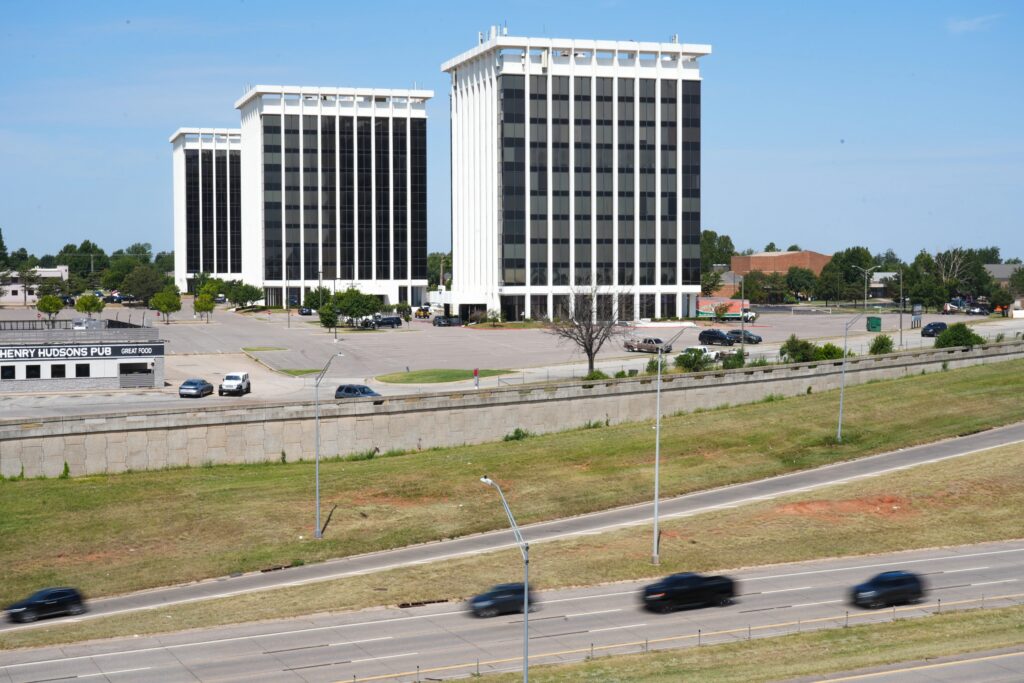
Plans to redevelop Landmark Towers, three identical 10-story buildings in northwest Oklahoma City, into a multifamily development are moving forward.
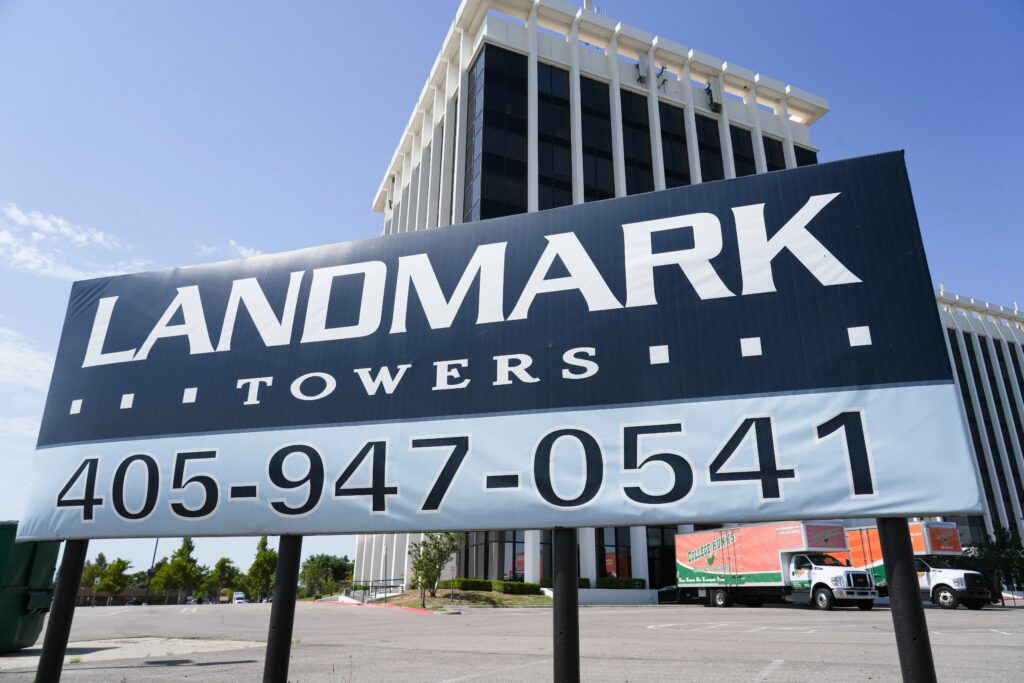
Landmark Towers, 3545 NW 58th St., has served as office space since the towers’ construction in the 1960s and 1970s.
Gardner Tanenbaum, an Oklahoma-based real estate developer, purchased the property about eight months ago for about $16.25 million.
“What got me, more than anything, was when I went into any of the (offices) from the first floor to the top, the views are spectacular,” chairman Richard Tanenbaum said of the buildings that sit south of Lake Hefner Parkway and Northwest Expressway. “If you look out (north), you get unencumbered views of the lake. If you’re (south), you get great views of downtown, and then you have west and east, you have sunrise and sunset. Whatever view you want to have.”
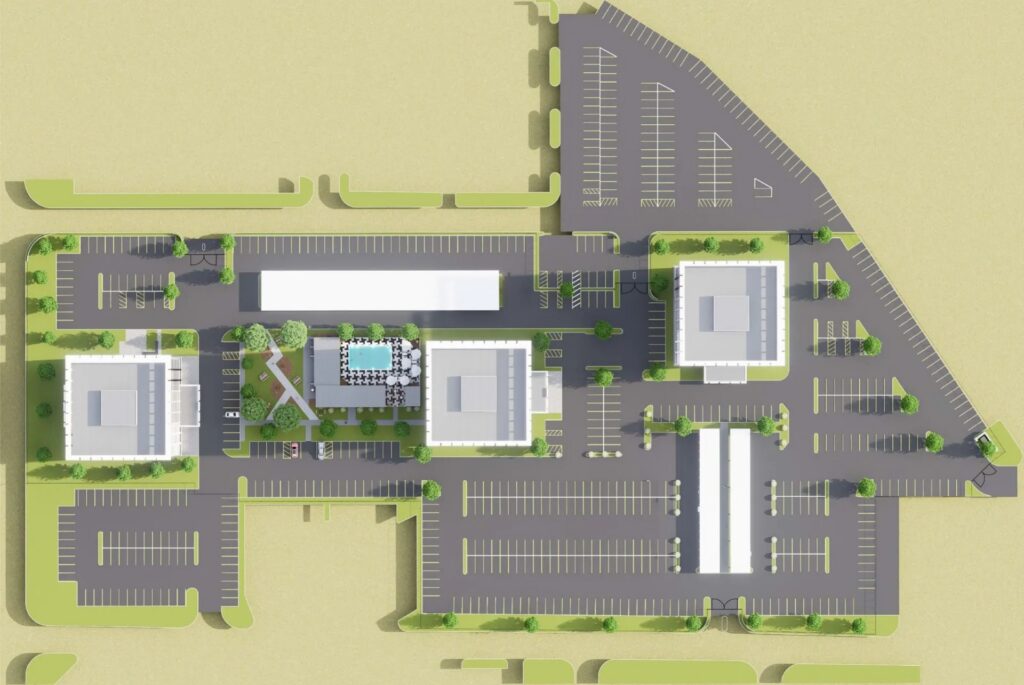
The 9.36-acre property, renamed “The Landmark,” will turn into a gated community with more than 300 mid-century modern apartments.
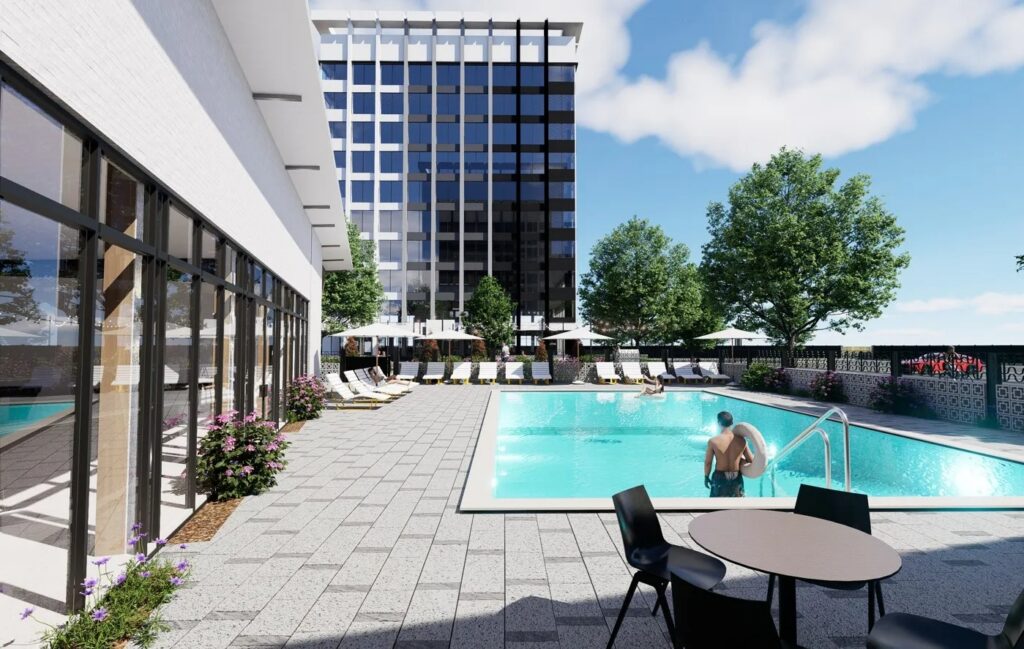
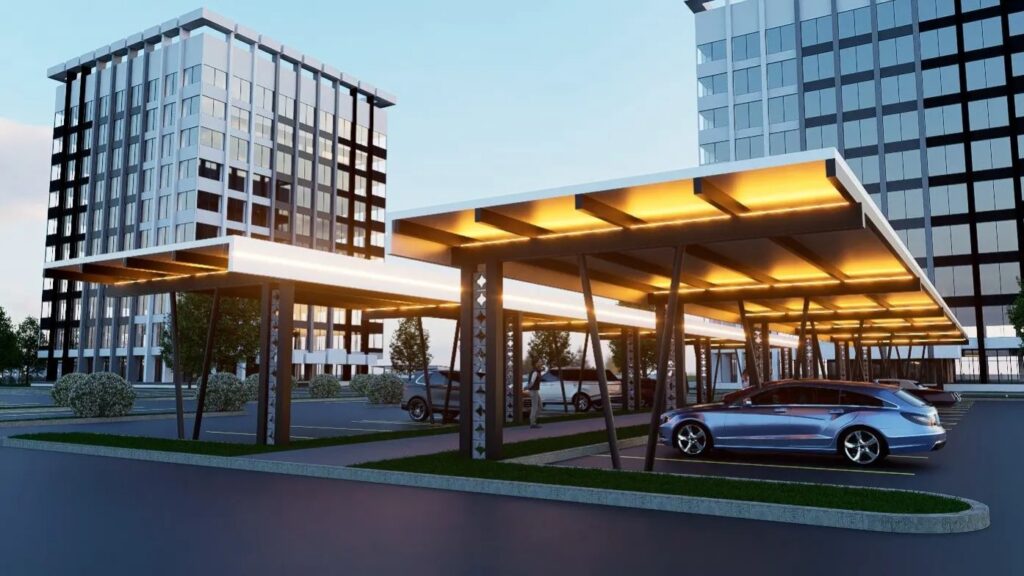
According to a site plan for the project, each tower has 101,380 gross square feet, making a combined 304,140 square feet. The site plan includes a pool and barbecue area between the west and central towers, and green spaces along the site. The property currently has 812 parking spots available, but this number is set to decrease to 506.
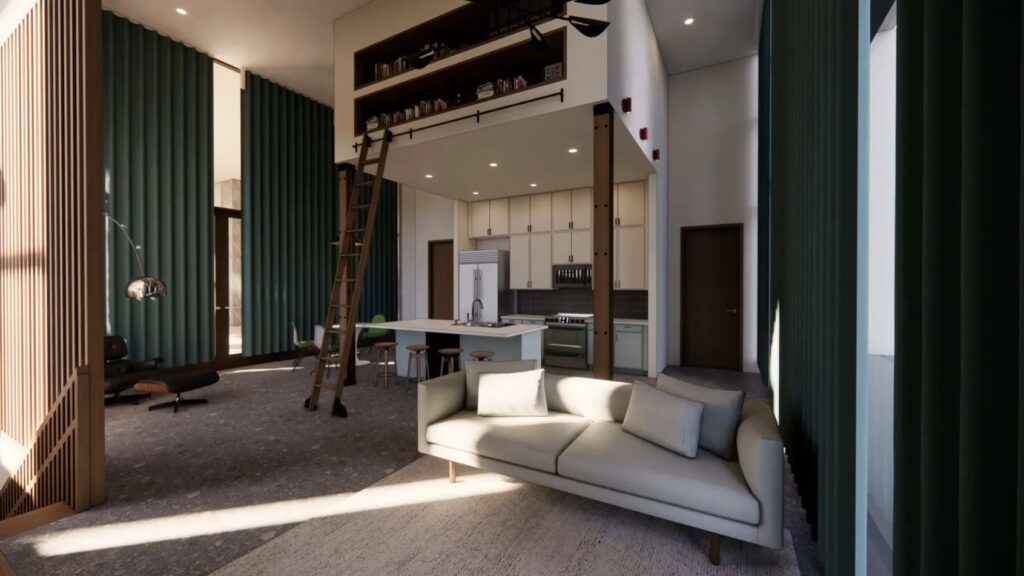
Tanenbaum said the development will create a “reverse penthouse” on the buildings, where the ground level apartments will be connected via staircase to the basement.
“In the early days, in Paris, Rome, London, wherever, the most valuable apartments back in the day were the first floor apartments, because there were no elevators,” Tanenbaum said. “We have a lower level that we can access. So we’re gonna have several apartments on the first floor of all three buildings.”
Tanenbaum said the target audience was “medical center people” based on its close proximity to Integris Baptist Hospital. Monthly rent for a two-bedroom is planned to range between $1,500 to $2,500.
Tanenbaum said work will begin with demolition in the central tower later this summer. Construction is expected to last 24 months.
Historic tax credits and development
Turning historic buildings into housing is not new for this company. Gardner Tanenbaum has developed several historical buildings into housing, including the Lincoln Plaza into The Presley, the Fidelity National Building into Park Harvey, and Citizens Bank Tower into The Classen. The developer is also in the process of renovating Robinson Renaissance.
Construction for Landmark Towers, originally named National Foundation Life Center, began in 1967 with the east tower and ended in 1971 with the west tower. National Life Insurance Co. occupied 20,000 square feet in the original tower and the remainder of the space in the first two buildings was fully occupied when the final building was built.
In 1983, the company started to transition its operations to Fort Worth, where it still operates as a subsidiary of United Healthcare. In 1986, the towers were renamed Landmark Towers, which, at the time, were 60% occupied.
Landmark Towers was officially added to the National Register for Historic Places in January. A copy of the application shows the project was certified on Oct. 17, 2025. Tanenbaum told The Oklahoman that the previous owners applied to get the property on the National Register.
Properties listed on the National Register can qualify for a 20% income tax credit to assist rehabilitation of historic buildings if the buildings are meant for commercial use.
This will be the seventh property that Gardner Tanenbaum developed using historic tax credits.
“The location is great (and) we’re able to get the historic tax credits,” Tanenbaum said.
Lynda Ozan, deputy state historic preservation officer for the Oklahoma State Historical Preservation Office, said tax incentives work as a five-year program, but some projects may have different construction timelines depending on size and complexity.
Ozan said the organization works closely with developers during the entirety of projects to ensure guidelines are followed, including maintaining historical aspects of the building.
To get tax incentives, owners need to go through a three-part process: Explain that it’s a historic property; outline the current conditions of the building and changes proposed; and prove they did exactly what was outlined.
Ozan said tax credits are not awarded until after construction has ended.
“Once somebody can actually occupy the building, that’s when you get those credits,” Ozan said.
She said in Oklahoma, owners can get up to 40% of tax credits: 20% coming from federal tax credits and 20% from state tax credits.
In the case of Landmark Towers where three buildings are in place, the owner would be entitled to just one tax credit application for the whole property because it only has one owner.
Ozan said she has been working with the Landmark Towers development for roughly a year. Since it’s a requirement for properties seeking tax incentives to be listed on the register, Ozan said it’s normal for developers to ask about the tax incentives before the property is added to the register.
“They’re coming to us about a specific building that they want to convert in some way, whether it’s housing, whether it’s commercial,” Ozan said. “So, whatever the situation may be, they come to us and say, ‘We’ve got a historic building, and we want to take advantage of the (tax) credits.’”